

 English
 русский
 Português
 عربى
عربى فارسی
فارسیIndustry News

What Causes Abnormal Vibration in an AC Vibration Motor?
 Sep-11-2026
 Industry News
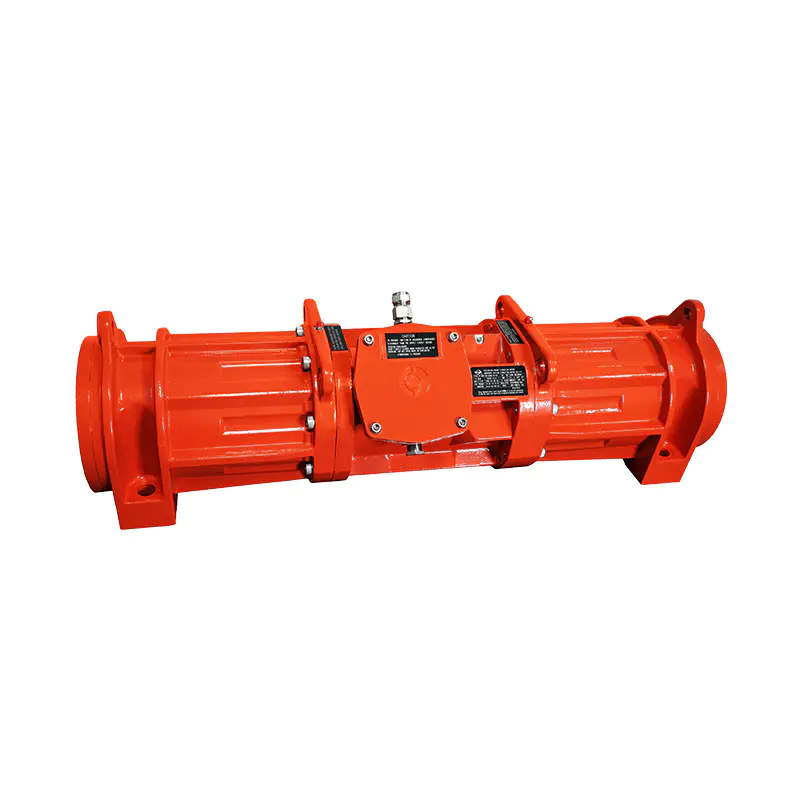
An AC vibration motor is designed to generate controlled mechanical vibration, but controlled vibration is very different from unwanted vibration. When a motor operates outside its intended mechanical or electrical conditions, the resulting movement can affect the performance of the equipment it drives. For engineers and industrial buyers, understanding the difference is important when selecting a motor for feeders, screens, hoppers, compacting equipment, and other vibrating machinery. For an AC vibration motor manufacturer, preventing abnormal vibration begins with engineering, component selection, precise assembly, and testing.
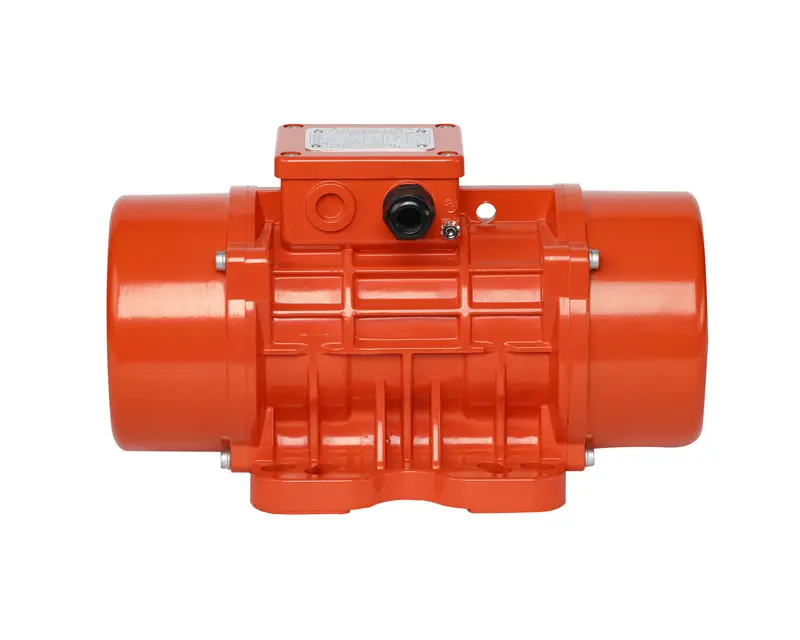
The Motor Must Be Balanced for Vibratory Duty
Unlike a conventional motor whose primary purpose is rotary motion, a vibration motor intentionally generates centrifugal force through eccentric weights. This makes rotor balance and eccentric weight configuration important parts of the product design.
If the rotating system is not properly balanced, unwanted mechanical stress may develop during operation. Manufacturers therefore need to control rotor assembly, eccentric components, shaft installation, and related tolerances during production.
A carefully controlled manufacturing process helps ensure that the intended vibration characteristics are produced consistently from one motor to another.
Bearing Selection Cannot Be Treated as an Afterthought
Bearings inside a vibration motor experience mechanical loads associated with continuous vibratory operation. Their selection, installation, lubrication requirements, and seating conditions therefore need to correspond with the motor's intended duty.
For manufacturers, bearing installation is more than simply placing a component into the housing. Proper positioning and assembly are necessary to maintain the relationship between the rotor, shaft, and housing.
This becomes particularly important when motors are supplied for equipment expected to operate repeatedly or for extended periods.
Mounting Conditions Affect the Final Result
Even a properly manufactured motor can perform differently when its mounting structure is unsuitable. The mounting surface, fastening arrangement, frame strength, and motor position all influence how vibration is transferred into the equipment.
For this reason, equipment designers should consider the motor and vibrating machine as a complete mechanical system. A manufacturer can also review mounting requirements during the technical communication stage and help determine whether the selected motor configuration is compatible with the intended equipment.
Electrical Matching Still Matters
Mechanical vibration is the primary function of a vibration motor, but electrical configuration remains fundamental to stable operation. Voltage, frequency, phase, power rating, and motor speed need to correspond with the intended application and available power supply.
Before production, manufacturers can confirm the required electrical specifications with the buyer. This reduces the possibility of supplying a motor with an unsuitable configuration and makes equipment integration more straightforward.
For international projects, confirming the local electrical conditions is particularly useful when developing an industrial vibration motor for export.
Fasteners and Eccentric Settings Need Reliable Control
Vibration places continuous mechanical stress on the motor and its mounting structure. Fasteners, eccentric weights, covers, and related components therefore need to be properly installed and secured.
From a manufacturing perspective, consistency is important. Assembly procedures should control fastening, component positioning, and eccentric weight settings according to the approved product configuration.
These details may seem minor compared with motor power or speed, but they can directly influence how the finished motor behaves once installed on vibrating equipment.
Testing Helps Verify the Complete Motor
Quality inspection should not stop after checking electrical parameters. A vibration motor manufacturer can evaluate the assembled product through appropriate production and testing procedures before shipment.
Depending on the product design and customer requirements, manufacturers may pay attention to:
- Electrical performance and insulation condition
- Motor operating noise and running condition
- Bearing and housing assembly
- Rotor and eccentric weight configuration
- Mechanical vibration characteristics
- Overall assembly quality
Testing provides manufacturers with an opportunity to identify inconsistencies before the motor reaches the customer's production line.
Reliability Begins During Manufacturing
Abnormal vibration is rarely solved by looking at a single component in isolation. Rotor balance, bearings, eccentric weights, electrical configuration, mounting structure, and assembly quality all contribute to the final operating condition.
As an AC vibration motor manufacturer, we approach product development as a complete engineering process. From material and component selection to rotor assembly, eccentric weight configuration, electrical inspection, mechanical testing, and final quality control, we focus on producing vibration motors that provide stable and predictable performance for industrial vibrating equipment.
Mobile
Products
Contact Us
- Address: No.6 Building, Wanfeng 98 Industrial City, Shajing Street, Baoan District, Shenzhen, Guangdong, China.
- Phone: +86-18923719730 / +86-0755-27460501
- Fax: +86-0755-27460606
- E-mail: [email protected]
Copyright © Shenzhen Putian Vibration Motor Co., Ltd. All Rights Reserved.

