

 English
 русский
 Português
 عربى
عربى فارسی
فارسیIndustry News

Why Does My Concrete Vibrator Overheat Often
 Feb-13-2026
 Industry News
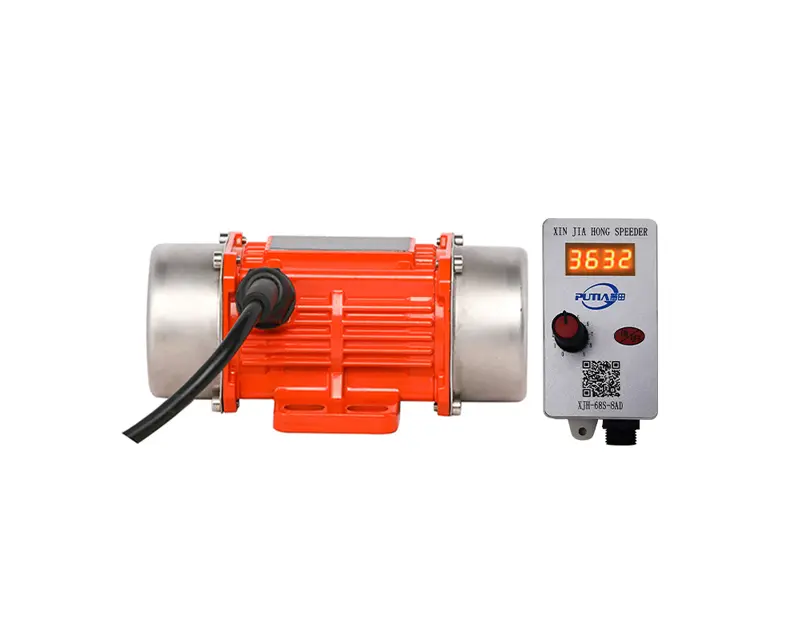
When concrete is placed on a job site, the action of an Industrial Vibration Motor attached to a Concrete Vibrator plays a crucial role in determining the final strength and durability of the structure. Users often ask whether this vibration really makes a difference — and if so, how significant that impact might be. Many contractors and field operators have shared their own experiences on forums and construction blogs, raising questions like “Does proper vibration really enhance compressive strength?” or “Can over-vibration weaken the mix instead of strengthening it?”
To understand these questions, it’s essential to look beyond anecdotal impressions and examine what research and industry practice tell us about vibration’s mechanical effect on concrete consolidation and its subsequent strength development.
What Happens Inside Fresh Concrete
Fresh concrete typically contains entrapped air pockets and a range of particle sizes that can cause to voids and weak spots if left undisturbed after placing. According to concrete technology research, vibration helps the mixture rearrange into a denser, more uniform mass by forcing the heavier particles downward and driving entrapped air upward and out of the mix. Eliminating these voids significantly improves the bond between the paste and aggregates — a key determinant of compressive strength. At a consistent water-cement ratio, the presence of even a few percent of entrapped air can reduce compressive strength noticeably — research shows that each percent of air can lower strength by a measurable margin if not consolidated properly.
Indeed, Duff Abrams’ classic work on concrete demonstrated that proper consolidation, normally achieved through vibration, can have as much impact on compressive strength as mix design adjustments. Voids and honeycombing left behind through insufficient consolidation act as stress points under load, reducing the overall capacity of the concrete element to bear compression and shear forces.
Vibration and Pore Structure
Laboratory studies reveal how vibration influences the internal pore structure of concrete. When vibration is applied during and immediately after placing, it alters the distribution and size of pores inside the concrete matrix. Vibration tends to reduce the number of larger pores while increasing the number of smaller, evenly distributed ones. This process makes the concrete denser, reducing porosity and permeability, which contributes to strength and long-term durability. One study using image analysis found that vibration mixing reduced concrete’s average pore diameter and enhanced its freeze-thaw resistance — a key performance attribute in many climates.
However, it’s important to note that vibration’s effect isn’t always purely positive. Excessive vibration — either too long or at inappropriate frequency — can damage the stability of entrained air bubbles essential for durability against freeze-thaw cycles, especially in air-entrained mixes. High-frequency vibration applied for extended times can cause to excessive air loss, potentially reducing the microstructure benefits of small, well-distributed bubbles that protect against thermal stress.
Strength Gains Through Proper Consolidation
Controlled vibration influences strength by enabling a more effective concrete consolidation process. When the Concrete Vibrator is inserted at appropriate intervals and for the appropriate time, entrapped voids collapse and cement paste wets aggregate surfaces more completely — thus enhancing the interfacial transition zone (ITZ), which is commonly the weakest phase in concrete. This leads to improved compressive strength, sometimes reflected in performance tests where vibrated concrete outperforms non-vibrated mixes in compression tests — especially when vibration power and duration are optimized.
In practical terms, field operators often report that well-vibrated sections of slabs and beams exhibit fewer visible defects such as bug holes or honeycombing, indicating a more complete consolidation compared to areas with limited or no vibration. It’s these consolidated zones where strength and durability characteristics typically align more closely with design expectations.
Balancing Vibration Time and Frequency
One of the more common forum discussions about Concrete Vibrators is how much vibration is enough. Too little vibration leaves voids — compromising strength — while too much can cause segregation and weaken the mix. Current guidelines suggest moderating vibration time and matching the vibration frequency to the mix’s characteristics. Users share that once large air bubbles stop rising to the surface, consolidation is usually adequate for strength purposes.
From a practical point of view, professionals in companies like Shenzhen Putian Vibration Motor Co., Ltd. emphasize the importance of matching vibration settings — such as amplitude and frequency — to the specific concrete mix and construction scenario. This helps the vibrator do its job without inadvertently harming the concrete structure.
The influence of a Concrete Vibrator, powered by a capable industrial motor, on concrete strength is both real and measurable. Through improved consolidation, reduction in voids, and better internal structure development, vibration contributes to the mechanical performance of hardened concrete. However, the effect depends on how vibration is applied: adequate but not excessive time, proper frequency, and careful attention to mix properties. Operators and engineers alike should consider these factors to ensure that the vibration process enhances strength without compromising other material properties.
For construction teams wanting to optimize their vibration practices, understanding both the science and field experience helps bridge the gap between theory and high-performance concrete outcomes.
Mobile
Products
Contact Us
- Address: No.6 Building, Wanfeng 98 Industrial City, Shajing Street, Baoan District, Shenzhen, Guangdong, China.
- Phone: +86-18923719730 / +86-0755-27460501
- Fax: +86-0755-27460606
- E-mail: [email protected]
Copyright © Shenzhen Putian Vibration Motor Co., Ltd. All Rights Reserved.

